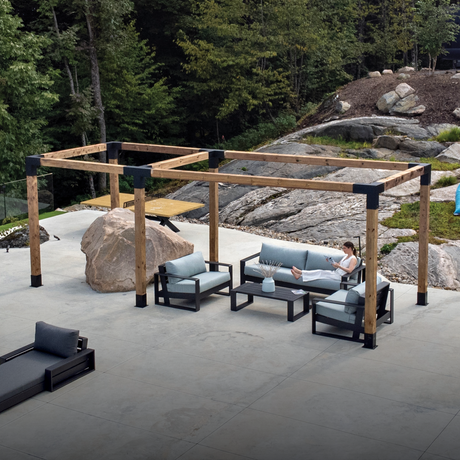
At the start of a new season, many homeowners look at their outdoor space differently. The patio that worked last year suddenly feels exposed to the sun, or the backyard lacks a defined area for relaxing or entertaining. That’s usually when the idea of adding a pergola starts to take shape.
If you’re considering a backyard pergola, the planning stage is where the most important decisions happen. A little preparation now can make the rest of the project much easier.
Start With Function, Not Structure
Before choosing a structure, consider how the pergola will function within your yard. A well-planned backyard pergola does more than provide shade. It creates a defined outdoor room that supports how you spend time outside.
Some homeowners plan for:
- Outdoor dining areas
- Lounge seating spaces
- Covered grilling or outdoor kitchens
- Gathering areas near a pool or patio
The intended use helps determine the size, orientation, and placement. For example, a dining area may require more overhead coverage, while a lounge space might focus on balancing sunlight and airflow.
Follow the Sun When Planning Your Pergola
One of the most common reasons homeowners consider a pergola is to manage sun exposure. The position of your yard, surrounding trees, and the direction your home faces all influence how much shade the structure will provide.
This is where design decisions become important. Understanding how sunlight moves across your yard will help guide the pergola’s placement and orientation.
Determine Where a Pergola Works Best
When planning a backyard pergola, placement should feel natural within the overall layout of the yard.
Common locations include:
- Directly off the back of the house
- Over an existing patio
- Near a pool or fire feature
- As a freestanding structure deeper in the yard
Think about how people move through the space. A pergola should feel connected to the rest of the backyard rather than isolated from it. Walkways, sightlines, and proximity to the home all influence how comfortable the finished space will feel.
Choosing the Right Pergola Style for Your Backyard
Once you know where you want your pergola to go, the next step is choosing the structure that will support how the space is used. The style of a pergola affects how it connects to the house, how much coverage it provides, and how it fits within the overall layout of the yard.
Single Pergola for Smaller Spaces
A single pergola works well for patios, seating areas, or smaller outdoor spaces. These structures create a defined gathering area without overwhelming the yard.
Wall-Mounted Pergolas That Extend Your Home
Wall-mounted pergolas attach directly to the home, extending outdoor living space from the house to the yard. This option works well over patios, decks, or outdoor dining areas where homeowners want partial coverage connected to the home.
Double Pergolas for Larger Outdoor Areas
For larger outdoor areas, a double pergola provides expanded coverage. This style is commonly used to create outdoor dining areas or large entertainment spaces.
Angled Pergolas for Architectural Design
An angled pergola uses a pitched roof design rather than a flat top, creating a more architectural look that aligns with certain rooflines. Since the structure uses angled beams, it also works well when homeowners plan to add a covered roof system.
Should You Build Your Own Pergola?
Many homeowners assume adding a structure requires hiring a contractor, but it’s entirely possible to build your own pergola with the right planning and a well-designed kit.
DIY pergola installation often appeals to homeowners who want:
- More control over the project timeline
- Clear understanding of the structure being installed
- Transparency around costs and materials
Systems like Toja Grid are designed specifically to simplify pergola construction. Instead of complex joinery or advanced carpentry, the system uses brackets that connect standard lumber to create a strong, stable structure. This allows homeowners to build the structure themselves, saving on contractor costs while maintaining full control over the timeline and design.
The components are modular so the same system can support different pergola styles, from smaller patio structures to larger backyard pergola layouts. It also makes it easier to adapt the design if your outdoor zone changes over time.
Before deciding to build your own pergola, it’s still worth reviewing local building regulations. Some municipalities require permits for permanent outdoor structures depending on size and whether the pergola attaches to the home. Planning for these requirements early helps ensure the project goes smoothly once construction begins.
Why Planning Your Pergola Early Pays Off
Most pergola projects start with planning, not construction. By thinking through layout, sun exposure, and whether you want to build your own pergola, you can approach the project with a clear plan. That preparation makes it much easier to choose the right backyard pergola and move forward confidently when you’re ready to install.
A well-planned pergola doesn’t just change the look of a backyard. It changes how the space is used throughout the season.
Start Designing Your DIY Pergola
With the right planning and a reliable system, building a backyard pergola can be a manageable DIY project. Explore Toja Grid pergola kits to see how you can build your own pergola with confidence.